
June 22, 2026 | Story by Heather Guenther (Student Life), featured image by Danny Silva, photos by Michigan Photography
In its 55 years of existence, U-M Spectrum Center has stood witness to countless joyful acts of resistance and resilience.
Becoming the country’s first university campus office dedicated to supporting LGBTQ+ students, built in part by students who heard “No” when they petitioned the university to host a conference on homosexuality.
Hosting the first Lavender Graduation ceremony in higher education to honor LGBTQIA2S+ graduates and allies of all genders and sexualities, inspiring more than 500 schools to do the same.
Advocating for—and winning—greater protections for these communities at U-M, providing a blueprint for other gender and sexuality campus centers across the nation.
For all the publicly celebrated distinctions, there are many, many more significant milestones that Spectrum Center helped set in motion with far less fanfare. These private moments are known only by a select few, quietly knit together with the care and hope that flows through Spectrum Center.
The first time a queer student found clothes that affirmed their gender. The first time a transgender student got outfitted with a chest binder.
The first time a student felt safe.
As much as students may say Spectrum Center held a prominent supporting role in shaping their academic and personal journeys, the reverse is also true. The center’s legacy is one forged by an untold number of students, faculty and staff who imagined a more inclusive, supportive campus.
“This is my place”
Situated within the Division of Student Life, Spectrum Center has gone by multiple names throughout the decades, but one truth remained unchanged: The center is a space where everyone belongs.
Sometimes students will drop in to work on homework. Sometimes it’s to take a quick nap between classes. Other times, it’s to find someone to talk to about basic needs, like finding housing or gender-affirming care.
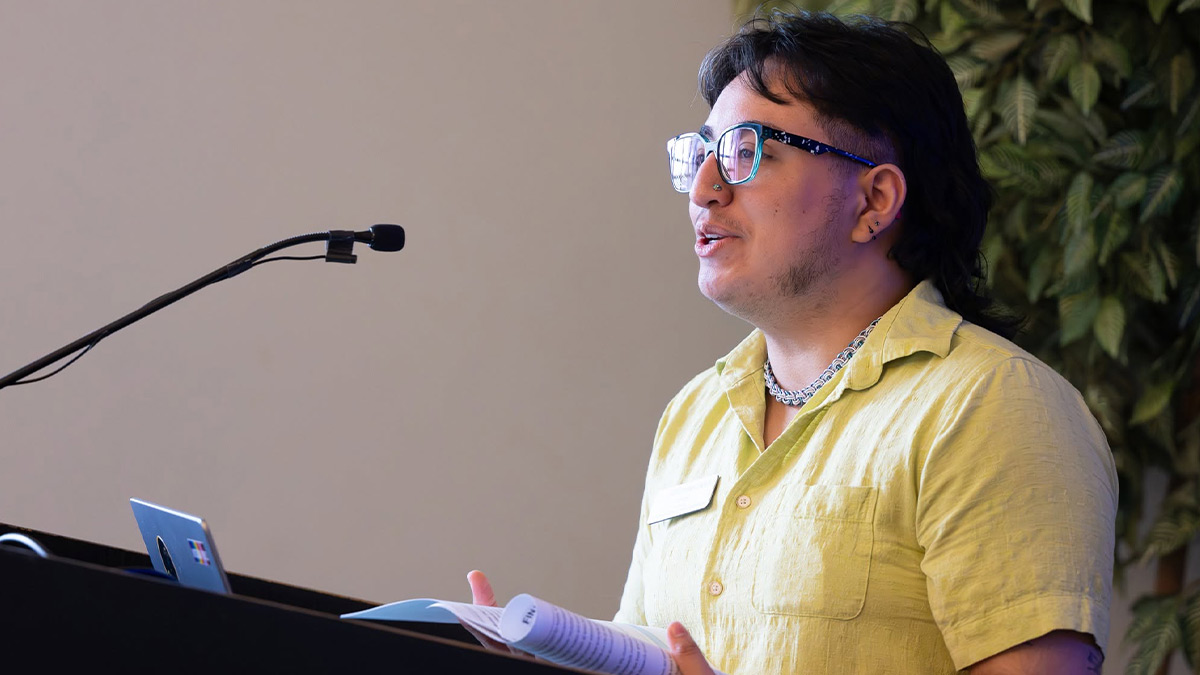
One step inside Spectrum Center and Sebas Abbate knew where they’d be attending graduate school.
U-M had already experienced a meteoric rise to the top of Abbate’s 80-school spreadsheet, driven by the University of Michigan School of Social Work’s academic reputation and, equally important to Abbate, Spectrum Center.
As a queer, trans Latine student, Abbate was first drawn to the center’s resources. The center’s staff are what convinced Abbate that Ann Arbor was where they belonged.
“It was just such a sweet experience. It completely affirmed that ‘This is my place’,” Abbate said, recalling their visit with their mom. “My mom settled in a chair while I tried on my first binder and she took a nap. That’s how comfortable it was.”
“I love that I could bring her into that space and still feel safe and comfortable,” said Abbate, who is now a newly minted U-M graduate.
That sense of steady calm is no coincidence.
“When you have countless other people telling you ‘No, you don't belong,’ I want you to come to our space and feel like you belong. To feel celebrated. To feel seen,” said Dawn Espy, Spectrum Center’s associate director.
“Spectrum Center is always a home to those who need it.”
A bridge between worlds
Taylor Lewis found Spectrum Center through relationships built during their doctoral work.
A fifth-year doctoral student in the U-M Marsal Family School of Education, Lewis came to U-M to map the ways that underrepresented students create new spaces at public colleges and universities and, along the way, change their campuses for the better.
The work to build vibrant, inclusive communities becomes more intensive, and exhaustive, for those who hold multiple identities. Taylor understands the inner conflict because they’ve lived it.
“If you feel like you cannot bring your whole self to any one space, there’s a level of hurt and harm you experience from choosing to reveal only particular parts of yourself,” said Lewis, who identifies as a Black transmasculine male.
That feeling of being caught between worlds, while not belonging to any, is what drives Lewis in their research. At U-M, joining Spectrum Center as a graduate student staff member allowed Lewis to bridge the worlds of academics and practitioners. For others, Spectrum Center allows a kaleidoscope of identities to be seen and celebrated.
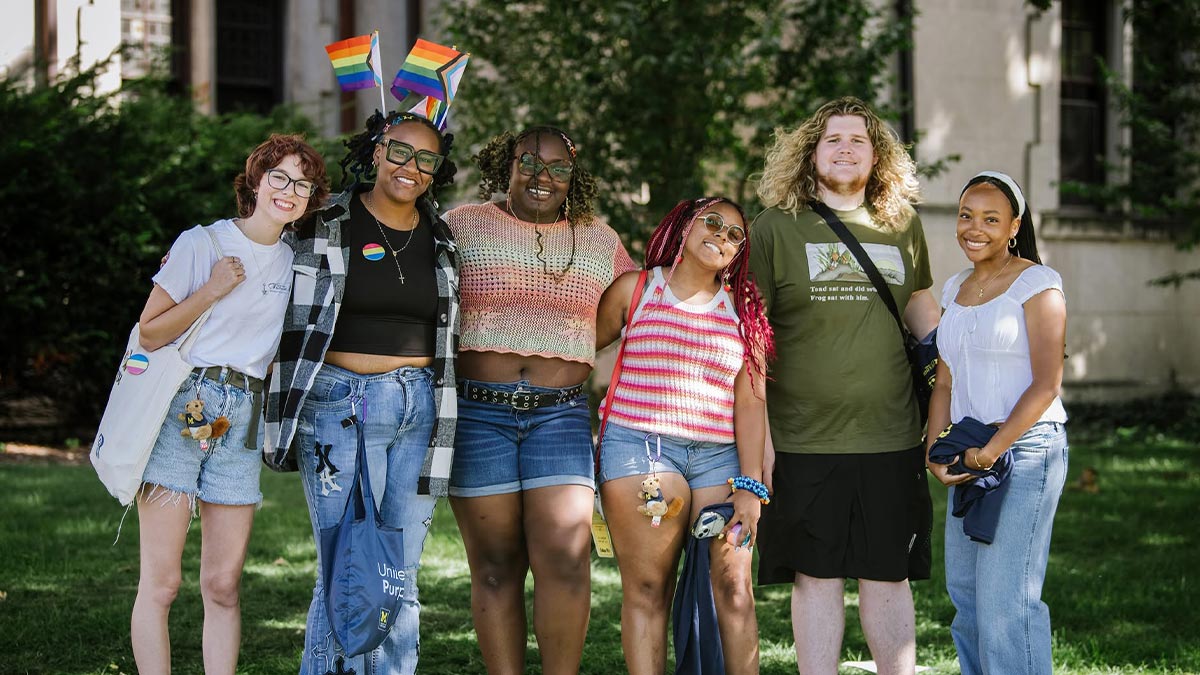
The culture that Spectrum Center staff has built is unique, even to those who play an active role in its maintenance.
“I feel extremely lucky to be working here,” Espy said. “I am an openly queer Black person from Detroit holding a leadership position at the University of Michigan, and I think, for a lot of students, that's a reality they haven't always seen.” They paused.
“I know it was not something I saw when I was younger,” Espy added.
“Models of possibility”
A conversation earlier this year with one of Spectrum Center’s recent graduates, Macie Richardson, almost brought Espy to tears.
“Macie talked about how our staff team are models for possibility,” Espy said. “Our students get to see myself, Jesse [Beal, Spectrum Center’s director], and the rest of our staff be professionals, have kids, and do things our students may not have thought possible for queer or transgender people.”
For the center staff, Espy believes the “professional role of modeling” is a natural outgrowth of the center’s enduring philosophy: Critical hope. Many students who frequent Spectrum Center have embraced this brand of hope.
“This is something I’ll take with me,” Abbate said. “With all the outside pressures we face, this work is really difficult, and we can still work to make things better.”
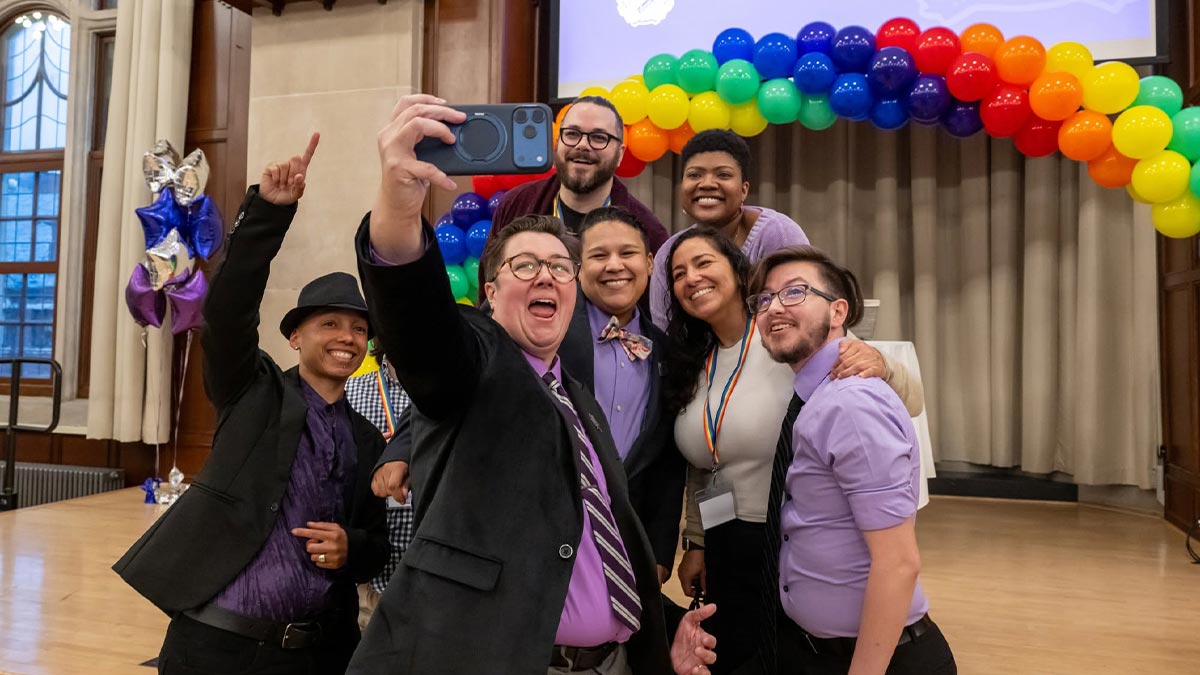
The center’s staff see their role as stewards of a legacy built on hope, belonging and collective care—and it extends beyond Ann Arbor.
“It’s our job to ensure we use our resources well, and I think a lot of that is paying it forward,” Espy said. “A lot of that is making sure what we do here does not stay here in isolation.”
As Lewis looked ahead to a year of celebration, they shared their hopes: “At one time, Spectrum Center didn’t exist. But it’s here today because students imagined something better.”
“I hope we encourage students to keep dreaming, to keep imagining a better future.”
Find 55th anniversary celebrations and explore queer and trans history at U-M at spectrumcenter.umich.edu/55th.
Read more